The Rise of Electric Vehicles: A Comprehensive Guide to the Future of Transportation
Electric vehicles (EVs) are no longer a niche market or a futuristic concept; they have become a driving force behind the automotive industry’s transformation. From early experiments in the late 19th century to the modern battery‑powered cars that dominate headlines today, the journey of EVs is a story of innovation, policy shifts, and changing consumer attitudes.
1. A Brief History of Electric Vehicles
The first electric car appeared in the 1820s, but it wasn’t until the 1890s that electric cars began to compete with gasoline-powered vehicles. In the early 20th century, electric cars were popular for their quiet operation and ease of use, especially in urban environments. However, the mass production of the Ford Model T and the proliferation of cheap gasoline infrastructure pushed EVs into obscurity.
Fast forward to the 1970s, and the oil crisis reignited interest in alternative propulsion. The California Air Resources Board introduced the Zero Emission Vehicle (ZEV) mandate, pushing manufacturers to develop electric and hybrid models. The 1990s saw the introduction of the first mass‑produced hybrid, the Toyota Prius, and the launch of the first modern electric car, the General Motors EV1, in 1996.


Despite early enthusiasm, the EV1 was discontinued in 2003, and electric cars remained a niche segment for many years. The turning point came in the late 2000s, when advances in lithium‑ion battery chemistry, combined with a growing awareness of climate change, created a perfect storm for EV adoption.
2. The Technology Behind Modern EVs
At the heart of every electric vehicle lies its battery pack. Modern EVs predominantly use lithium‑ion batteries, prized for their high energy density, long cycle life, and decreasing cost. A typical battery pack in a mid‑size EV contains several thousand individual cells arranged in modules, which are then integrated into the vehicle’s chassis.
Electric motors are another key component. Unlike internal combustion engines, electric motors provide instant torque, resulting in quick acceleration. Most EVs use permanent‑magnet synchronous motors or induction motors, both of which are efficient and reliable.
Power electronics, such as inverters and DC‑DC converters, manage the flow of electricity between the battery, motor, and auxiliary systems. These components ensure that the vehicle operates safely and efficiently across a range of speeds and driving conditions.
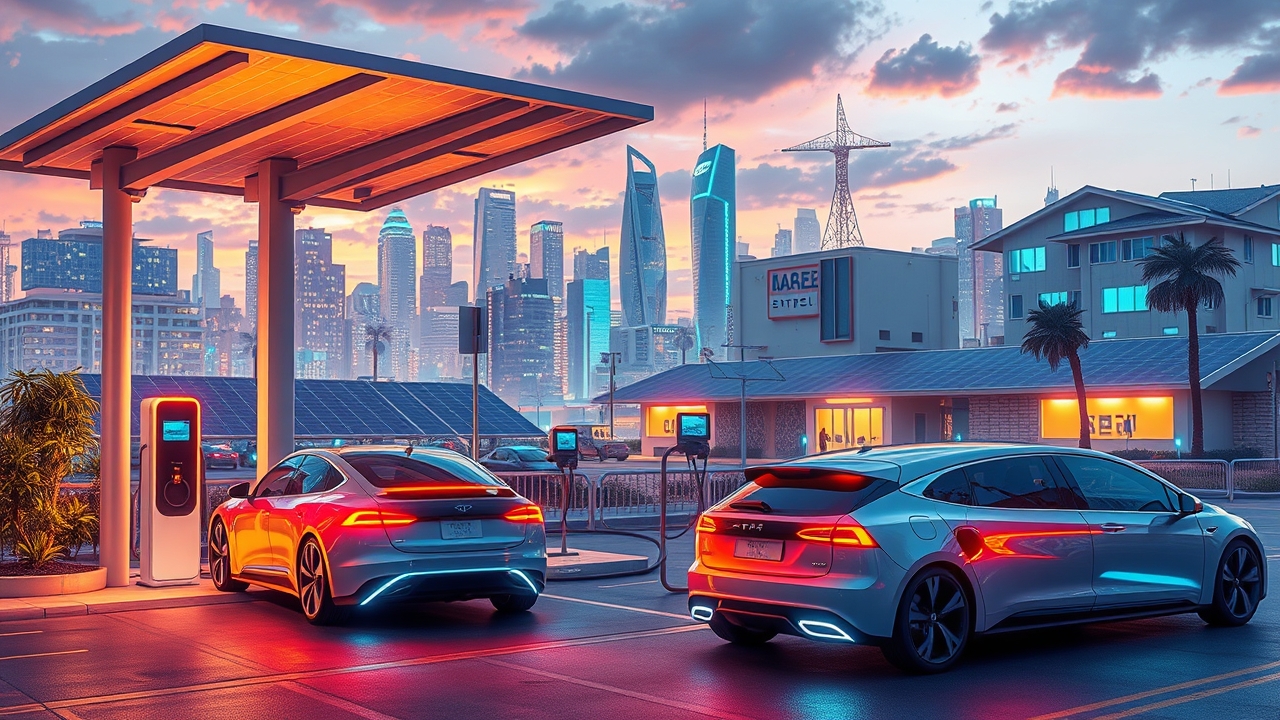
Charging infrastructure is essential for widespread EV adoption. The charging ecosystem is divided into three levels: Level 1 (120 V AC), Level 2 (240 V AC), and DC fast charging (DCFC). Home charging is typically Level 2, while public fast chargers can deliver 150 kW or more, enabling a 0‑80% charge in as little as 20 minutes.
3. Environmental and Economic Benefits
One of the primary motivations for adopting EVs is their potential to reduce greenhouse gas emissions. While the production of lithium‑ion batteries does generate emissions, studies show that the lifecycle emissions of an EV are significantly lower than those of a gasoline vehicle, especially when powered by renewable electricity.
In addition to environmental benefits, EVs offer economic advantages. Lower operating costs—thanks to the higher energy efficiency of electric motors and the lower cost of electricity compared to gasoline—translate into savings for consumers. Furthermore, EVs have fewer moving parts, resulting in reduced maintenance costs for brakes, oil changes, and exhaust systems.
Governments worldwide are implementing incentives to accelerate EV adoption. These include tax credits, rebates, free parking, and access to high‑occupancy vehicle lanes. Such policies not only reduce the upfront cost of EVs but also encourage the development of charging infrastructure.
4. Challenges Facing the EV Market
Despite the rapid growth of the EV market, several challenges remain. Range anxiety—concern over a vehicle’s limited driving range—continues to deter some consumers. While average daily mileage has decreased in many regions, the perception of limited range can be a significant barrier.
Battery supply chain constraints, particularly the availability of lithium, cobalt, and nickel, pose another challenge. Ethical sourcing and environmental concerns related to mining operations have prompted manufacturers to explore alternative chemistries and recycling programs.
Charging infrastructure gaps, especially in rural and low‑income areas, can limit EV adoption. While urban centers have seen a surge in charging stations, many regions still lack the necessary infrastructure to support widespread use.
Finally, the integration of EVs into the electrical grid raises concerns about peak demand and grid stability. Smart charging solutions and vehicle‑to‑grid (V2G) technologies are being developed to mitigate these issues.
5. The Global Market Landscape
China leads the world in EV sales, driven by aggressive government policies and a robust domestic manufacturing ecosystem. Europe follows closely, with the European Union setting ambitious targets for zero‑emission vehicles by 2035. In the United States, states like California and Colorado have pioneered EV adoption through incentives and regulatory measures.
Automakers worldwide are investing heavily in EV development. Traditional giants such as Ford, General Motors, and Volkswagen have announced plans to phase out internal combustion engines entirely within the next decade. Meanwhile, new entrants like Rivian, Lucid, and NIO are carving out niches with high‑performance models and innovative business models.
6. Future Trends and Innovations
Battery technology continues to evolve. Solid‑state batteries promise higher energy density, faster charging times, and improved safety. Researchers are also exploring lithium‑sulfur and sodium‑ion chemistries as potential alternatives to lithium‑ion.
Autonomous driving and connectivity are becoming integral to the EV experience. Over‑the‑air (OTA) updates allow manufacturers to deliver new features and performance improvements without requiring a dealership visit.
Vehicle‑to‑grid (V2G) technology is gaining traction, enabling EVs to act as distributed energy storage units. By feeding excess battery capacity back into the grid during peak demand, EVs can help stabilize the grid and reduce the need for additional power plants.
Finally, the concept of “mobility as a service” (MaaS) is reshaping how people think about transportation. Shared EV fleets, subscription models, and integrated multimodal platforms are creating a future where owning a car is optional for many consumers.
7. Practical Tips for Potential EV Buyers
Before purchasing an EV, consider your typical driving patterns. If you drive long distances regularly, look for models with the highest range and a robust charging network in your area.
Evaluate the total cost of ownership (TCO). While the upfront price may be higher, lower fuel and maintenance costs can offset this over time. Many governments offer rebates that can bring the price down significantly.
Check the charging infrastructure in your home and workplace. Installing a Level 2 charger at home can dramatically improve convenience, especially if you have a dedicated garage or driveway.
Read reviews and test drive multiple models. Pay attention to factors like cabin comfort, infotainment systems, and safety features.
8. Conclusion
The rise of electric vehicles marks a pivotal shift in how we approach transportation. With technology advancing rapidly, costs falling, and environmental concerns intensifying, EVs are poised to become the dominant form of personal and commercial transport in the coming decades. By understanding the history, technology, benefits, challenges, and future trends, consumers and policymakers alike can make informed decisions that shape a cleaner, more sustainable future.
For further reading, see related references on Wikipedia.
Leave a Reply